
No courses in the enrolment list.


Australia Minimum Wage 2026: Latest Rates, Student Pay & Work Rights Explained

by Moni Vuong

Australia has one of the highest minimum wages in the world, which makes part-time jobs an essential source of revenue for international students. Nonetheless, it is relatively complex when it comes to payment terms, including award rates, casual rates, tax rates, and visa working limitations.
This guide explains how minimum wage laws affect university students living in Australia. It also discusses pay entitlement, lawful number of working hours, and ways to determine if one is compensated appropriately and where one can seek assistance.
What Is the Minimum Wage in Australia?

What is The Minimum Wage?
The minimum wage rate in Australia is the lowest rate employers are required by law to pay employees for their ordinary hours of work. This wage is considered a safety net within the country’s laws governing employment. The minimum wage is reviewed every year by the independent Fair Work Commission, and its implementation is usually effective from July every year. As of July 2025, the minimum wage rate in Australia is set at a rate of AUD $24.95 per hour or $948 per week based on a 38-hour work week.
Worth noting, however, is the fact that this ‘minimum wage’ rate is gross wage, prior to tax deductions or allied legal deductions such as superannuation contributions
National Minimum Wage vs Award Wages
Australia has a two-tiered minimum wage scale:
- The National Minimum Wage is for those workers who are not covered by any award or registered enterprise agreement. The minimum wage is a legal floor for those workers.
- Award Wages apply where the employee is subject to an industrial award—a kind of contractual document that defines minimum wages and working conditions for industries or occupation. Awards cover most workers in Australia, including many workers in the areas of hospitality, retail, cleaning, caring, and administration.
Awards also cover many circumstances where the award wages are accompanied by other conditions, besides the minimum wage. For instance, the awards may cover minimum hourly rates of pay depending on job, experience, and qualifications. Such rates are higher than the minimum national wage.
If an employee is or becomes covered by an award or an enterprise agreement, this applies instead, and this rate cannot be lower than the national minimum wage determined by the FWC.
Casual vs Part-Time/Full-Time Pay (Casual Loading Explained)
Casual employees are those whose employment does not carry any guarantees or leave provisions, and casual staff are paid a higher rate than part-time or full-time staff for the same position. This supplement of money is referred to as the casual loading.
- Minimum wage rates for casual workers also comprise the minimum national wage rate and a 25 % casual loading for the absence of annual leaves and job security.
- For instance, from 1 July 2025, the minimum casual rate of pay calculated with the loading would be about AUD $31.19 an hour, which is 25% higher than the base rate of $24.95.
This implies that casual workers, who are normally employed in the hospitality, retail, and customer service industries, end up earning more per hour than full-time and part-time employees, even though they are not compensated annually or sick leave.
Industry Awards, Enterprise Agreements and Different Minimum Rates
Although there is a national minimum wage, the bulk of the Australian workforce is covered by modern awards or enterprise agreements that set more specific terms of minimum pay for specified industries or workplaces.
- Modern awards cater to industries or occupations like hospitality, retail, cleaning services, residential care, and clerical work. These awards specify minimum wage rates per hour, levels of classification, allowances, penalty rates, and rates of overtime.
- Enterprise agreements are bargains between employers and employees, with possible union representation, and may contain rates of pay above the award rate. These must be approved through the Fair Work Commission and cannot award anything less than the minimum award entitlements.
Because various awards dictate varying minimum wages and terms, two people doing similar work in different industries might be entitled to differing minimum rates of remuneration, even in instances where both persons exceed the national minimum.
Hourly Pay vs Take-Home Pay (Tax, Super and Deductions)
It’s essential for employees to know the distinction between the basic hourly wage and the amount you take home to the bank:
- Hourly Wage represents your gross earnings before deductions. The national minimum wage ($24.95 per hour) is always given before tax.
- Taxes – The income tax system in Australia is progressive, which means a certain amount of tax is withheld from your payment by the employer based on the level of income you earn.
- Superannuation – employers must also pay a percentage of what you earn (set at 12% as from 1st July 2025) towards a superannuation, or retirement fund, and that is not paid as a component of the hourly rate.
- Other deductions may include union dues payments or the repayment of wage advances or benefits that you have elected to take.
This is because it implies that your net earnings (funds you take home) are lower compared to your gross earnings. Gross and net incomes are very important when it comes to financial budgeting and job comparisons.
Who Sets the Minimum Wage and How It Changes Each Year
Role of the Fair Work Commission and Annual Wage Review
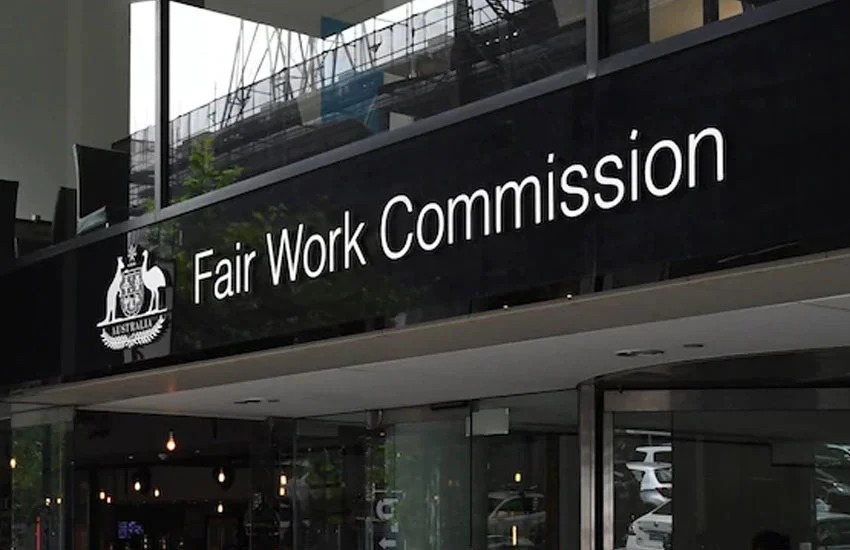
Under Australian laws, the Fair Work Commission is responsible for deciding on the minimum rate of pay that should apply on a national basis each year, and this occurs under the Fair Work Act of 2009. The duty of the Fair Work Commission is to ensure that the rates of pay for the minimum wage keep in tune with the current state of the economy and the cost of living.
Every year, the FWC carries out an Annual Wage Review (AWR), during which it considers submissions from union and business organization bodies, government authorities, and other key parties, as well as economic data. Using all this information, the Commission’s Expert Panel determines if changes should occur to the current National Minimum Wage and Minimum Wage levels fixed by modern awards (minimum industry pay standards).
Then, the FWC proceeds to make an Annual Wage Review Decision, containing the National Minimum Wage Order. This Order determines the new base minimum wage rate for adults and special minimum wages for juniors, apprentices/trainees, or workers with a disability if applicable.
In the year 2025, the FWC lifted the National Minimum Wage and the minimum wages in the modern awards by 3.5 percent. This came about after the Annual Wage Review and took effect from the 1st of July, 2025.
When New Minimum Wage Rates Usually Start Each Year
Minimum wage rates in Australia come into effect on 1st July every year or on the first full pay period after 1st July. This applies to both National Minimum Wage rates and Minimum Wage rates as prescribed in modern awards and the enterprise agreements.
For instance, in the decision on the 2024-25 Annual Wage Review, where a 3.5% rise in minimum wages was implemented, its application was on or from the first full pay period on or after 1 July 2025.
This is because the Australian financial year also begins on 1st July of each year, and thus a natural time to effect changes is when the financial year begins. The employers must make sure that the new rates are applied from the right pay period after the mentioned date.
Where to Find the Official Current Rate Online
To access online information regarding minimum wages and other details on current rates, some of the best official sources are:
Fair Work Ombudsman – Minimum Wages Page: This page provides the latest information about the current minimum wages, links to pay guides, and tools for determining your personal minimum wage according to the job type.
Annual Wage Review by the Fair Work Commission: Here you can find access to FWC decisions and orders about Annual Wage Reviews as well as draft determinations about new wage rates.
Fair Work Ombudsman – Pay and Conditions Tools: The Pay and Conditions Tool assists employees and employers in understanding the award that applies to them and the minimum wage they are entitled to.
These government publications are the best resource for the most recent rate information, future rate changes, and your rights as an employee – and are utilized by employees, employers, and payroll practitioners throughout Australia.
Student Minimum Wage in Australia – What International Students Should Know

Do student workers get minimum wage?
Every Australian worker is entitled to the minimum wage. This includes international students who have part-time or casual employment while pursuing their courses of study. Australian workplace laws require employers to pay the minimum wage and other relevant requirements like providing a payslip and information about tax deductions. This is applicable no matter the nature of employment since you can work part-time during term or full-time during holidays.
International students are reminded, under specific government instructions, that the minimum wage must be paid and that international students have the same rights as others when it comes to the workplace.
Common student jobs and typical hourly pay
International students in Australia usually tend to be employed in sectors where part-time or casual job opportunities exist, namely:
- Hospitality (cafes, restaurants, bars)
- Retailing & Supermarkets
- Customer Service & Admin
- Warehousing and delivery occupations
In Australia, as of July 1, 2025, the minimum hourly rate is AUD $24.95 (before tax), and in some casual jobs, there is an added casual rate of 25% per hour.
In some cases, the actual rate of pay for student employment may end up well above the legislated award rate, depending on the industry and if penalty rates are applicable for nights, weekends, and/or public holidays. Nonetheless, all employees should not earn lower than the award and the minimum wage rate, regardless of what you have agreed upon.
Junior vs adult rates
Many such students are under the age of 21 or are new to certain sectors. Some award wages have junior rates or training rates, which are lower than the adult minimum, specifically in the hospitality or retail sectors. The pay rises every year until the individual turns 21 or gains enough work experience.
However, the junior rates themselves cannot fall below the minimum required by the award or the national benchmark, and employers cannot reduce their rates on the basis of immigration or student status.
Visa Status vs Pay – Why International Students Must Be Paid the Same
Your visa status is irrelevant when it comes to pay rights in Australia. Regardless of whether you are a citizen of Australia, a permanent resident, or a scholarship/student visa holder, it is protected by the Fair Work Act, ensuring a minimum wage rate for all employees. Every worker is entitled to be compensated at award/minimal wage rates, receive a payment packet, and have their work hours documented properly.
International students may feel uneasy about reporting cases of being underpaid due to visa-related worries, but the enforcement of the Fair Work Ombudsman is not connected to visa enforcement. You are able to take action if you feel that an employer is being exploitative or underpaying workers.
Unpaid Trials, “Training Shifts” and When They Are Not Legal
“Unpaid trials” or training shifts are sometimes extended by employers to students, especially those studying hospitality and retail. While informal training or observations are acceptable and don’t go against the law, it becomes an issue if an employee-employer relationship is established, which means you are benefiting their operations.
According to the Fair Work Ombudsman, if you are working regular duties, helping with the day-to-day activities, or performing tasks such as other workers, you are most likely entitled to the Australian workplace laws and therefore have the right to be paid the minimum wage for the period you have worked.
In unpaid agreements, the emphasis should be on learning, observation, or building a skill rather than performing normal work obligations because otherwise, they can be deemed employment.
Internships, Placements and Volunteering – What Should Be Paid?
The regulations regarding internships, work placements, and volunteering in Australia are as follows:
- Volunteering with a not for profit organization or charity, where there is no employment relationship and the activity is voluntary, need not be compensated.
- Placements for vocations or volunteer internships as part of an educational requirement (such as for a course prerequisite practicum) are allowed to occur without pay because they are not technically employment.
However, if the internship or placement consists of functions and tasks similar to those of employment, and/or creates value for the organization and/or lacks an obvious purpose for education or personal development, then it probably constitutes an employment relationship and you should expect payment at minimum wage and required benefits.
It is important to have proper documentation and agreements about the nature of the placement to ensure that misunderstandings are avoided.
How to Check If You’re Being Paid Correctly

Whether or not you are a student, casual worker, or part-time employee, learning how to check your pay is very important to help you determine whether you are getting the minimum wage or not. Here are the steps you can use to check your pay:
Use Fair Work pay calculators
One way you may quickly determine if you’re being correctly compensated is by using Fair Work Ombudsman’s online pay calculator tools.
The Fair Work Ombudsman offers a Pay and Conditions Tool (PACT), where you can enter some details about your work (such as industry, number of hours worked per week, and award), to determine the following:
- Your minimum hourly rate
- Penalty rates (for weekend, evening, or holiday work)
- Allowances
- Overtime entitlements
This provides you with a basis of comparison with what you are presently getting, and this is especially useful if you are not sure if an award is applicable and how the loadings work.
Check payslip requirements
Your payslip is your first proof of entitlement to ensure you are being paid accurately. According to Australian workplace law, employers are required to issue payslips within one working day of payment, and they must display certain information in English.
The compliant payslip must entail:
- Employer’s name (and ABN if applicable)
- Your name
- Pay period and date of payment
- Gross income and net income or gross salary and net salary
- Hourly rates and respective hours worked (if applicable)
- Any loadings, allowances, penalty or overtime rates received
- Deductions (such as taxes or authorized repayments)
- Superannuation contributions
If your pay slip is missing any of those important details, such as hours worked or how loadings and/or penalty rates are calculated, it could mean that you do not have enough information to accurately check your payment.
Common red flags for underpayment
Note the following red flags that may indicate issues with the payment process itself and that perhaps you are being underpaid:
- Your hourly rate appears to be lower than minimum/award rates
- You’re not getting penalty rates because it is a weekend/public holiday
- Your payslips are not transparent about your hours/pay components
- You’re not getting paid for all the time you were working (training or business meetings)
- You’re asked to do unpaid ‘trials’ or trial shifts.
If any of the above points are applicable, it’s definitely time to check your pay via the Fair Work methods and discuss with your employer. Often, underpayment claims result from errors and not from malicious conduct.
Identifying Your Correct Award and Classification
More likely than not, Australian workers will be covered by a modern award, which determines rates of pay and conditions of working for your industry or job. To find out what award you are entitled to, and on what level, you need to:
- Turn to the Pay Calculator/Find My Award tool provided by Fair Work.
- Look at the award coverage clause and description and check whether your work falls within the category.
- Research your classification level within that award on the skills, duties, and experience that apply to you.
This also impacts your minimum rate, which could be different depending on your level, such as entry-level or supervisory. Ensure that you are clear where you are placed, as it may have an effect if it is considered incorrect.
Tracking Your Hours, Breaks and Rosters Accurately
Maintaining a personal record of hours worked, including start/finish times and break periods, is one of the best ways to calculate whether you have been paid accurately.
Fair Work laws dictate how records must be kept by employers, and it is imperative that you keep track of your working hours as well. This is important because it helps you:
- Check that you are being compensated properly for hours worked (including early starts or late finishes)
- Determine if penalty rates apply (Saturday/Sunday/Late nights)
- Your Logbook Entries: Compared with Payslip Information
Tracking your hours can actually be achieved simply by writing the hours down in a diary, saving time tracking applications or taking snapshots of your roster – everything can help track your pay entitlements to the award or agreement that you are covered by.
How Students Can Earn More Than Minimum Wage

Weekend rates
Many employees are paid more over the weekend because of penalty rates, whereby an employee is paid more per hour for working during certain hours. For instance, employees are paid more over the weekend, especially if they work in hospitality or retail. This is because working over the weekend, especially when students are free, is a way of earning more than the minimum wage.
For weekend rates, employers pay a higher rate of pay to employees who work on the weekend. These rates are regulated by the award or enterprise agreement that applies to you. They are substantially higher than the normal rates.
Evening shifts
Working evening shift hours, after usual business hours, may also have higher rates of pay. Many modern awards contain rates of pay that are premiums charged for unsociable hours (such as after 7 pm or 9 pm), so late night work is indeed reflected in higher rates of pay.
Evening rates apply in sectors such as hospitality (cafés, bars, restaurants), in which business is at its peak during the evenings.
Public holiday rates
Casual or part-time employment on a public holiday can provide some of the greatest pay increases available to workers. Above the ordinary rate of pay, public holidays usually provide payment rates of up to 200 % or more.
Public holidays: These are special days (Anzac Day, Christmas Day, and so forth), and awards will normally require the payment of extra pay for this kind of work.
Although not all students take up jobs on holidays, those who do get to earn significantly more than the minimum wage for their efforts.
Higher-Paying Industries for Student Jobs (Hospitality, Care, Tutoring, etc.)
Certain sectors are known to pay rates higher than minimum wage rates, at least for casual or entry level positions, particularly when topped by penalty rates, tips, or skill premiums.
Below are examples of roles and sectors where salaries tend to be higher:
- Hospitality (Barista, Waiter/Waitress, Kitchen Assistant) Usually involves rates of pay above minimum award rates with penalty rates and tips.
- Retail and customer service – weekend/holiday work is usually better paid.
- Tutoring – Strong academically gifted students can earn well in excess of the minimum wage rate, sometimes AUD $45-70 per hour or more (private tutoring rates are variable and sometimes negotiated directly).
- Care work (such as aged care or disability care) – Some care worker positions have higher rates because they require skills.
- Freelance or skill-based jobs (online technology services, part-time administration, content writing). These rates are sometimes negotiated independently of awards and are sometimes higher than minimum wage.
Building Skills That Lead to Better-Paid Roles Over Time
Among the most effective means for enhancing your earning capacities while studying is developing skills sought by employers, particularly for purposes other than minimum wage jobs. This is an effective way for you to move from being an employee in entry-level positions and earn better wages while studying.
Examples include:
- Customer service and communication skills enable you to upgrade from entry-level to a team leadership or supervisory position, earning higher salaries.
- Language tutor or academic support skills can enable you to charge high rates by offering private tuition or online assistance.
- IT or technological skills, digital marketing, or designs – either freelancing or part-time contracting work can be more lucrative per hour than casual rates.
Devoting time to learn these skill sets through courses or applying for work related to these skill sets may lead to better employment down the line.
Taxes, Superannuation and Payslips for Student Workers

Getting a Tax File Number (TFN) or Equivalent
Among the very first things that need to be done before actually resuming a job in Australia is to apply for a Tax File Number, short for TFN, which is a special, nine-digit tax reference number assigned by the Australian Taxation Office, or ATO. Having a TFN is necessary, as it indicates to your employer how much taxes to withhold from your paycheck, and can also safeguard you from being over-taxed.
Without a TFN, employers are required by the government to withhold taxes from the pay of said individuals at a considerably high rate of 47%. In order to avail a reduced rate of taxes, one must provide his/her TFN number to the employer after acquiring it.
You can also apply for your TFN for free at the ATO website – you would require your passport and visa information. The TFN number remains with you lifelong, so it is important to take care of it and use it when transitioning to your new job every time.
How Income Tax Works for Casual and Part-Time Workers
In Australia, your income tax is deducted from your payments via a process known as PAYG (Pay As You Go) withholding, which is administered by your employer using tax tables supplied by the ATO.
Most international students are considered Australian residents when it comes to taxation if they are taking a course lasting six months or more. It means you will be subject to similar rates of taxation as Australian residents. Your first amount of income is also tax free.
If you’re treated as a non-resident for tax purposes (e.g., if your course of study is short), then you are not eligible for the tax-free threshold and start paying taxes from the first dollar that you earn, which is usually at a higher rate.
When you are employed casually or part-time, the company will automatically deduct taxes from the salary paid. By the end of the tax year, which is from July 1st to June 30th, you will have to submit a tax return, and many students are eligible for a refund of taxes paid during the year.
Superannuation (Retirement Savings) for Students
You would be surprised at the number of student workers who are also part of Australia’s superannuation scheme, which is its system of retirement savings. When a student satisfies certain eligibility conditions and earns more than a certain monthly sum, his or her employer has to make Super Guarantee contributions (of about 12% of his or her earnings) into a super fund.
It applies to full-time, part-time, casual, and temporary Australian residents, as well as international students. If you are on a casual basis and intend on leaving Australia after completing your studies, you are still eligible to contribute to your super, which is claimable once your visa has lapsed. It is done through Departing Australia Superannuation Payments once you are out of the country.
How to Read Your Payslip and Spot Problems
Your payslip is one of the most crucial pieces of paperwork that you will receive while working as a citizen of Australia. You are legally obliged to receive a payslip from your employer within a day of receiving payment, no matter if it is weekly, biweekly, or monthly.
In a compliant payslip, one would expect:
- Your Full Name and Employer Information
- The pay period (the dates you’re paid for)
- Gross income before taxes
- The amount of tax withheld
- Any superannuation contributions on your behalf
- Your net income (what is deposited into the bank)
Payslips enable you to verify if:
- The hours you worked are recorded correctly
- You have been paid the correct minimum wage or award rate
- Tax and superannuation have both been applied correctly with regards to the
If your pay slip is missing this information or not representative of the number of hours you have worked, this is an issue to look into with your company or even with the Fair Work Ombudsman if necessary.
Working Limits for International Students
Work hours during study terms
Under Australian immigration rules, international students in Australia with a Student Visa (subclass 500) are allowed to work while studying in the country, with certain restrictions to ensure education remains the top priority.
Starting from 1 July 2023, international students under the Australian immigration regulations will be able to take up any job for a maximum of 48 hours in a fortnight, which essentially means 14 days, while semester times are in progress.
What they are: A “fortnight” is considered a period of 14 days, starting on Monday and finishing on Sunday. The number of hours worked per fortnight cannot exceed 48 hours while your class is in session, whether or not you are employed by more than one firm.
It is, however, valid to work for unlimited hours during the official term breaks or holiday times, for instance, during semester breaks.
Same workplace rights as Australian citizens
International students are in fact entitled to the same workplace rights as every other worker within Australia. This includes:
- You will earn at least the minimum wage (or award wage) for all the hours you work.
- You are entitled to a safe working environment, freedom from discrimination, and fair treatment.
- You are entitled to correct payslips and entitlements, such as superannuation if it applies to you.
- Companies have to adhere to the workplace laws under the Fair Work Act in Australia.
Notably, your employers cannot discriminate against you based on your visa type, and you have the right to fair payment and all the protections that Australian citizens and permanent residents are entitled to.
If you believe that your rights in the workplace are not being upheld, for instance if you are being underpaid or overtime hours asked of you are illegal, then support can be received from the Fair Work Ombudsman without fear of having your visa canceled.
Visa risk
It is essential to comply with your work limit and other terms and conditions in your visa. Failure to comply with this may jeopardize your visa as a student. An example is given by an international student who faced serious repercussions because they were discovered working beyond the allowed number of hours. According to a case, an international visa was cancelled because they worked beyond the allowed number of hours.
Activities not compliant with the terms of your visa, such as working outside the permitted hours when you study, have the potential to invoke an investigation by Home Affairs and result in canceled visas, refusals of subsequent visas, and even deportation from Australia.
Balancing Work Hours with Study and Wellbeing
Balancing paid work with study commitments and personal wellbeing is essential for international students in Australia. While part-time work can help with living costs, financial independence and work experience, working too many hours can:
- Reduce time available for class attendance and assignments.
- Increase stress and fatigue, affecting academic performance.
- Interfere with rest, health and social life.
Australia encourages education and immigration policies for international students to focus on the progression and well-being of the student by strictly observing the allowed number of working hours to balance studies and work.
Here are some tips that help maintain this balance:
- Plan out your week, working study sessions before locking in multiple shifts.
- Roster apps and planners can be used for tracking hours worked against the 48-hour fortnight.
- Communicate with employers about your class and exam schedule so shifts don’t conflict with academic deadlines.
- Prioritise rest and wellbeing — adequate sleep and breaks maintain productivity and reduce burnout.
Where Students Can Find Fair Minimum Wage Jobs

Job websites
One of the best methods of finding casual and part-time jobs for students is through job-sourcing portals found on the internet. The job portals list thousands of jobs, which you can filter using the criteria of your choice, including whether the job is suited for a student.
The popular Australian job search websites are:
- SEEK – major job portal with part-time and casual jobs suitable for students.
- True, there are extensive job listings across sectors like hospitality, retail, admin, and more.
- Jora – Another major job-aggregating site with flexible opportunities.
- Student Job Australia / Student Job Board – This website concentrates on jobs and employment suitable for students.
- LinkedIn – for part-time professional or office jobs, and networking job listings.
University resources
Universities in Australia also offer career services to aid in finding job opportunities which fit around study timetables. Such career services include:
- Job listings on campus for part-time, casual, and on-campus work.
- Career counseling for enhancing resumes/CVs and interviewing skills.
- Workshops and careers events (e.g. careers fairs, employer networking events).
- Job assistance programs, such as those offered by YouX Student Employment, assist in job searching, reviewing applications and practicing interview techniques.
Typically, these tools are free of cost for registered students and can help you directly connect with employers, who are aware of student schedules and compensation.
Networking and referrals
Sometimes the most employable job may never be found on an online job website but may be sourced by word of mouth. Casual and part-time jobs may be found this way, particularly in those involving the service industries.
Chat up classmates and student organizations – someone may know about a job café, store, or local business.
Attend university functions and job fairs – excellent arenas to network with recruiters or small business owners seeking trustworthy workers.
Go around the local businesses in person with your resume, and handing out resumes at coffee shops, bakeries, or gas stations can result in casual work.
Students succeed best by a combination of search and social networking, both virtual and face-to-face.
Avoiding Exploitative “Cash in Hand” Offers
Though job postings and university services provide legitimate job opportunities, some students are faced with “cash in hand” job offers where the company hires and compensates an employee under the table without any formal employee records or pay slips. Such job offers may look attractive considering the fact that one gets immediate money, but there are several hazards associated with them:
- Lack of payslips or tax documents – difficult to verify working hours or rights.
- Underpayment risk – Many cash-in-hand jobs are underpaid, sometimes in respect of minimum wage rates.
- Visa requirements – Working off the books can breach visa requirements and put your student visa in jeopardy.
- The lack of work rights – such jobs disregard standard rights such as working conditions, superannuation, or safety.
The Fair Work Ombudsman highly recommends that employees only take up work arrangements if they receive a payslip and contract, and to report any instances of underpaying or hazardous work environments rather than risking illegal employment.
What To Do If You’re Underpaid or Treated Unfairly
How to Raise Pay Issues with Your Employer
If you feel that you are being underpaid, the initial thing that you need to do is speak with your employer. In many cases, underpayment is a result of an honest error, and most employers will rectify the problem once it is brought to their attention.
Here’s how to deal with raising the issue:
- Remain calm and be professional. Begin with stating your issue.
- Use the correct rate for your pay by checking with official resources or information about the award being used.
- You need to share documents like your pay slip and award rate with your employer.
- Talk about the discrepancy together – your employer may refer to Fair Work Ombudsman advice if they are unsure.
Communication may result in an early resolution without the need for further escalation.
Getting Help from the Fair Work Ombudsman and Unions
If the problem cannot be solved with the employer, the workplace system of Australia provides the following free formal assistance:
Fair Work Ombudsman (FWO):
FWO is an Australian government agency that assists workers to understand and enforce their workplace entitlements, rates of pay, and claims of underpayment. You can:
- Contact FWO for guidance regarding your circumstances.
- Make an online enquiry or phone us for assistance.
- Request help with mediation between yourself and your employer.
- If necessary, the FWO can investigate, enforce compliance, and even recover unpaid wages.
- Official contact options: the FWO contact page has phone, online form and self-help tool links.
Unions and Worker Groups:
Unions represent workers in many industries (e.g., retail, hospitality, fast food) and can advise, support and sometimes represent you, especially where systemic underpayment or unfair treatment exists. Membership in a union of your industry segment may be able to offer you further assistance.
Both FWO and the union strive to promote fair outcomes and protect the rights of employees through the Fair Work Act.
Keeping Records and Evidence of Underpayment
Before approaching your employer or Fair Work, it’s important to collect strong evidence. Good record-keeping strengthens your case and helps others understand your situation clearly.
What to Collect:
- Payslips – These display hours worked, rates, tax, and totals.
- Employment contract or job description – verifies what you were told about compensation.
- Time sheets, screen shots of rosters, personal hour records – proves hours worked.
- Communicating with your employer about compensation (emails/texts).
- Award or Minimum Wage Reference Information – from official tools.
Employee record-keeping requirements:
It is mandatory on the part of employers to maintain precise time and payment records for all employees, and this record should be accessible in the English language to Fair Work inspectors.
Keeping copies ensures you have the ability to prove points if there are discrepancies. Once you have evidence, it will make it much easier to address this issue with your organization and possibly with the FWO or union if need be.
FAQs
Can my employer pay me less if I’m “still learning” or new to the job?
No. If you are new, inexperienced, or still learning, this is not grounds for a business to pay you less than the minimum wage or award rate. As soon as you are contributing to the business through productive work, you will be paid properly from your first shift.
The only exceptions are:
- Legit junior rates under an award (age-based)
- Apprentices or trainees under a registered training agreement
“Training pay”, “learning rate”, or “trial period pay” at rates below minimum wages is not lawful.
Is it legal for my employer to delay paying my wages?
In general, no. Employers are required to pay you on the agreed payday set out in your contract or workplace agreement. Regular late payments could be a violation of workplace law.
Although occasional late payments because of real mistakes can occur, consistent late payment is a major concern and should be brought up with the employer or Fair Work Ombudsman.
Can I be paid a flat “daily rate” instead of hourly pay?
Sometimes but only if the daily rate is still equal to or greater than what you’d be making at:
- Minimum wage or Award rates
- Penalty rates
- Overtime (if applicable)
A flat rate per day where you get less pay per hour is illegal, despite it having been orally agreed on by both parties.
Conclusion
Working while studying in Australia could be a great way to earn money and gain experience, as long as your rights are not violated. As an international student, you are entitled to minimum or award wages, correct payslips, and workplace rights despite your visa status.
Understanding how the payment of wages is, and where to go for accurate information, it is possible to prevent underpayment and visa issues. By staying educated and pro-active, it is possible to have a safe, legal, and positive experience while working in Australia.
Last updated on 24/12/2025

My name is Moni, and I am a seasoned PTE teacher with over 6 years of experience. I have helped thousands of students overcome their struggles and achieve their desired scores. My passion for teaching and dedication to my student’s success drives me to continually improve my teaching methods and provide the best possible support. Join me on this journey toward PTE success!





















I am a firm believer that the best teachers educate with their hearts not just their minds.
Moni | PTE MAGIC International Founder
Explore PTE
Tips & Tricks
In this 2026 guide, you’ll see a complete breakdown of real living expenses, part-time job...
Read more →The cost of living in Hobart among international students is among the most important aspects...
Read more →Why Adelaide Is One Of Australia’s Most Budget-Friendly Cities Adelaide is also unique in its...
Read more →