Nursing Degree in Australia Requirements: Step by Step Guide for International Students
03 March 2026
Why Choose a Nursing Degree in Australia

To study nursing in Australia is to get into one of the most prestigious and sought after professions in the world. The healthcare system is developed, nursing courses are globally recognized, and the atmosphere of compassion, equality and professionalism is established in Australia.
StudyAustralia.gov.au says that the top five most employable occupations in Australia include nursing, continuously. Nursing universities in Australia graduates are capable of accessing local employment or may pursue permanent residency using the skilled occupation list.
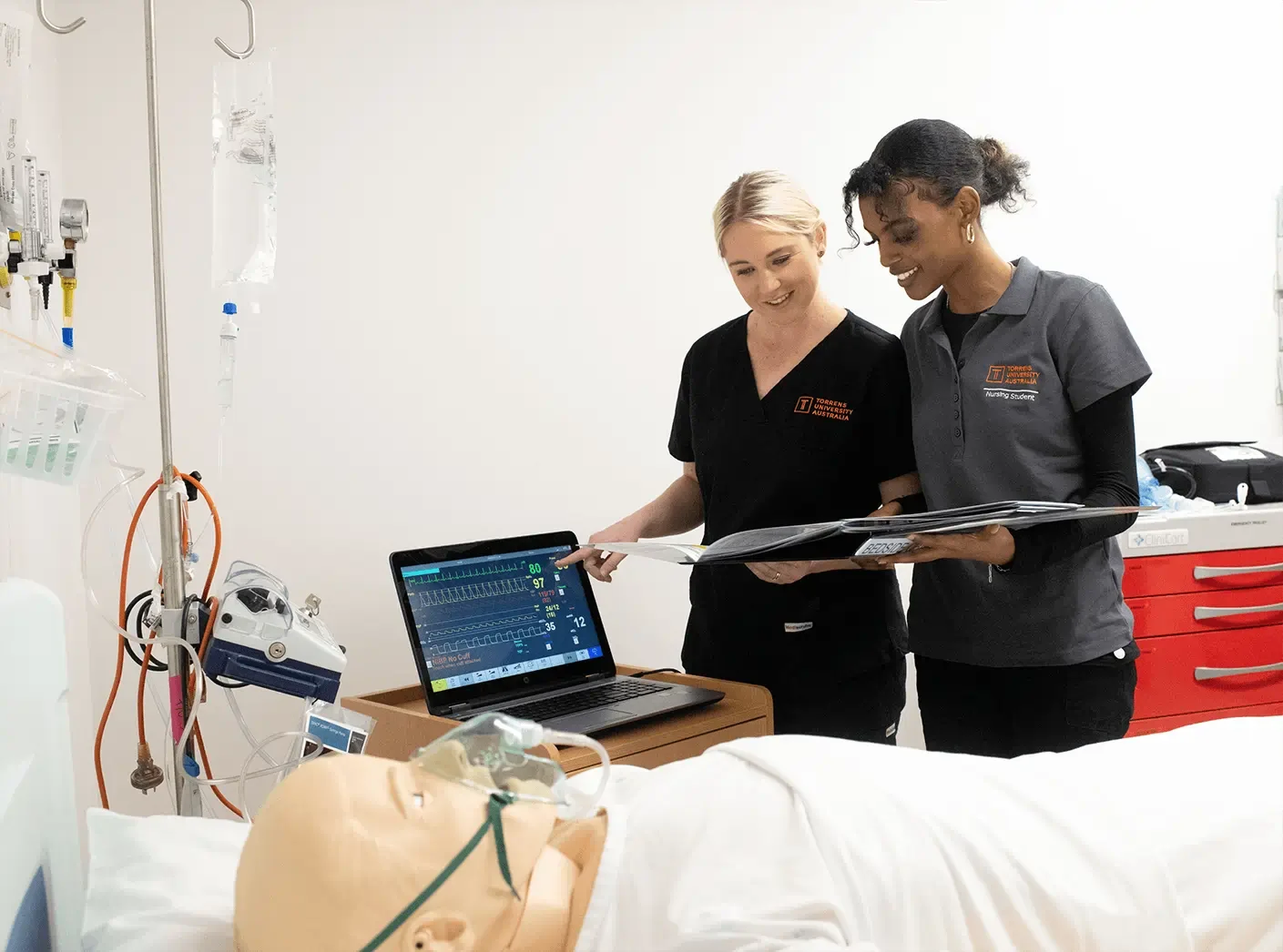
Nursing education in Australia also implies the access to a high quality hospital where you can have clinical placements, qualified lecturers and practice simulations that will equip you to address the challenges of international healthcare. Nursing students gain practical experience in a variety of health care settings and health services, such as hospitals, community clinics, and aged care facilities.
In brief, when you want to make a difference and at the same time have a stable income, making a decision to study nursing in Australia is definitely one of the most intelligent and rewarding decisions.
Eligibility Requirements for Nursing Degree Programs

International students have to fulfill a number of eligibility and documentation criteria before they can join nursing courses in Australia. These include meeting the entry requirements set by universities, such as academic prerequisites, English language proficiency standards, and any specified ATAR scores or alternative pathways for admission. Universities may also specify inherent requirements, which are the essential academic, physical, and mental attributes needed to successfully complete the course and participate in professional practice. A domestic student is defined as an Australian citizen, a New Zealand citizen, or a permanent visa holder, while an international student refers to individuals who do not hold these statuses.
Academic Qualifications (Year 12 or Equivalent)
In the case of undergraduate courses like the Bachelor of Nursing, you should have successfully completed an equivalent to Year 12, which means completion of secondary education or secondary education taught in English, with great grades in either biology, chemistry or mathematics.
For some applicants, completion of primary and secondary education in English may be required, especially as a way to demonstrate English language proficiency for university admissions.
When pursuing postgraduate programs, you must hold an undergraduate degree in nursing or another health-related field.
Also, the universities, in some cases, require proof of clinical practice or professional registration in your home country in the higher courses.
English Language Requirements (PTE, IELTS, OET)
In order to meet nursing degrees in Australia, English proficiency is necessary. Applicants must demonstrate English language proficiency to meet admission and registration standards.
Universities and the Australian Health Practitioner Regulation Agency (AHPRA) require evidence of English language competency, which can be demonstrated through approved English language tests.
Applicants whose primary language is not English may need to provide test results, unless they have completed education in a recognised country. Exemptions from English language tests may be available for those who completed primary and secondary education in recognised countries where English is the language of instruction.
The following are accepted in universities and Australian Health Practitioner Regulation Agency (AHPRA):
| Test | Minimum Overall Score | Minimum Each Component |
|---|---|---|
| PTE Academic | 65 | 65 in each section |
| IELTS Academic | 7.0 | 7.0 in each band |
| OET | Grade B | Grade B in each subtest |
PTE Academic and PTE Core are nowadays popular among universities as they have fast results and reliable AI based scoring. For those looking to excel, PTE exam preparation is key to achieving high scores.
Health and Background Checks
Applicants must undergo:
- Physical examinations to establish healthcare employment eligibility.
- Character checks: Police clearance certificates.
Most nursing universities in Australia require this before students can begin clinical placements or undertake any clinical placement as part of their program.
Types of Nursing Degrees in Australia
Australia has a wide range of nursing courses programs for international students undergraduate as well as graduate.
Vocational education, such as certificates and diplomas, offers practical, industry-relevant training and can serve as a pathway into nursing programs.
Enrolled nurses with relevant qualifications may be eligible for advanced standing or specialized pathways when applying for nursing degrees.
Bachelor of Nursing (Undergraduate)
- It is the primary course of nursing professionals that begin their nursing career.
- It involves class work, lab work and hospital placements.
- When completed, the students are eligible to be registered by AHPRA as a Registered Nurse (RN).
- For students planning their nursing career overseas, understanding English proficiency exams like the PTE is crucial. Learn more about which PTE module needs more preparation time to maximize your chances of success.
Master of Nursing (Postgraduate)
- Catering to students who already have knowledge about health or nursing.
- Duration: 1.5 to 2 years.
- It is concerned with clinical leadership, advanced practice, and research.
- Nurse practitioner or Clinical Educator are some of the specialized positions that graduates can follow.
Bridging and Conversion Courses for International Nurses
- Targeted at overseas nurses who require Australian registration, these programs are also designed for overseas students seeking to meet local nursing standards.
- They are usually experienced over 3-12 months based on their past qualification and command of the English language.
- The courses are AHPRA and ANMAC approved, designed to accord international training with nursing degree in Australia requirements.
Course Structure of Nursing Degrees in Australia
The course structure of a nursing degree in Australia is carefully designed to equip students with both the theoretical foundation and practical skills needed for a successful career in nursing and midwifery practice. A typical Bachelor of Nursing program spans three years of full-time study, blending classroom learning with extensive hands-on experience.
Throughout the course, students engage in a variety of units covering essential topics such as anatomy, physiology, pharmacology, and nursing theory. These core subjects provide the scientific and ethical framework necessary for effective nursing practice.
A key feature of Australian nursing degrees is the emphasis on clinical placements. Under the guidance of the Nursing and Midwifery Board of Australia and the Australian Nursing and Midwifery Accreditation Council (ANMAC), students are required to complete professional experience placements in diverse healthcare settings. These clinical placements take place in hospitals, community health centers, aged care facilities, and other clinical environments, allowing students to apply their knowledge in real-world scenarios and develop confidence in their nursing and midwifery skills.
The course structure is designed to ensure that students gain exposure to a wide range of nursing and midwifery practice areas, including acute care, mental health, community health, and aged care. This hands-on experience is essential for building the clinical reasoning and professional relationships that are vital in the nursing profession. By the end of the program, students will have completed the required number of clinical hours, as mandated by the midwifery board and midwifery accreditation council, ensuring they are well-prepared for registration and practice as a registered nurse in Australia.
Learning Outcomes for Nursing Graduates
Graduates of a Bachelor of Nursing degree in Australia are expected to achieve a set of learning outcomes that reflect the high standards of the nursing and midwifery professions. These outcomes are closely aligned with the registered nurse standards for practice established by the Nursing and Midwifery Board of Australia and the midwifery board.
Upon successful completion of their nursing degree, graduates should be able to demonstrate safe and effective clinical practice across a variety of healthcare settings. This includes the ability to integrate knowledge from the sciences and humanities to inform nursing practice, apply clinical reasoning to assess and respond to patient needs, and make evidence-based decisions in complex situations.
Strong communication and professional relationships are also central to the learning outcomes. Nursing graduates are expected to communicate clearly and compassionately with patients, families, and multidisciplinary healthcare teams. They should be able to work collaboratively, respecting the diverse backgrounds and needs of those they care for.
In addition, graduates must show an understanding of the social, cultural, and ethical factors that influence health and wellbeing, and be committed to ongoing professional development. The learning outcomes ensure that nursing graduates are not only clinically competent but also prepared to uphold the values and responsibilities of the nursing and midwifery professions in Australia.
By meeting these learning outcomes, graduates are eligible to apply for registration as a registered nurse with the Nursing and Midwifery Board of Australia, marking the beginning of a rewarding and impactful nursing career.
English Test Requirements for Nursing Programs
PTE Academic / PTE Core Minimum Score (AHPRA Accepted)
Both PTE Academic and PTE Core are recognized officially by AHPRA and universities to register and get admission to nursing.
The average mean score is 65 with no points lower than 65, which is identical to IELTS 7.0 or OET Grade B.
Such scores are certain to make sure that you can communicate successfully in English when interacting with patients, documenting and also when collaborating with clinical teams.
IELTS and OET Equivalents
If you prefer IELTS or OET, equivalent scores are accepted:
- IELTS Academic 7.0 (no band less than 7.0)
- OET Grade B in all components (Listening, Reading, Writing, Speaking)
The update by AHPRA in the year 2025 attest that PTE Academic and OET are still legitimate tests among nursing applications.
PTE MAGIC?s Specialized Healthcare English Training
PTE MAGIC has specialized medical training of PTE to those who are to attend English preparation nursing courses in Australia.
Pearson certified trainers design their programs, and they offer simulated dialogue in hospitals in real life to produce natural communication and confidence in clinical practice.
Universities Offering Nursing Degrees in Australia

Australia has universities that are known worldwide and have registered on the nursing courses which meet the AHPRA and ANMAC requirements.
Top Nursing Universities in Australia
- University of Sydney😕 Bachelor and Master Nursing with state of the art simulation labs.
- Deakin University: The practice based teaching and research oriented courses.
- Griffith University: Course provisions like Nursing, flexible degree, Queensland hospital clinical placements.
- Monash University: Characterized by good academic support and integration of state of the art medical technology.
| University | Degree | Duration | Tuition (AUD/year) |
| University of Sydney | Bachelor of Nursing | 3 years | 49,000 |
| Deakin University | Bachelor of Nursing | 3 years | 40,800 |
| Griffith University | Master of Nursing applicants may need to decide between OET or PTE for their English proficiency test requirements. | 2 years | 39,500 |
| Monash University | Master of Advanced Nursing | 2 years | 42,200 |
Admission Timeline
Applications are fixed twice a year in February and in July.
When it comes to securing a seat, you will have to have your academic transcripts, results of English tests, passport and CoE.
Career Pathways After Graduation
Graduating from a nursing degree in Australia opens multiple professional and migration pathways.
Registration with AHPRA
You would then need to be registered with the Australian Health Practitioner Regulation Agency (AHPRA).
This entails providing qualification checks, evidence of speaking the English language and professional recommendations.
Visa Options – 485, 189, 186 for Nurses
After graduation, you may apply for:
- Temporary Graduate Visa (Subclass 485):? an opportunity to obtain post study working rights (2-4 years).
- Skilled Independent Visa (Subclass 189): Permanent residency test is a point based test.
- Employer Nomination Scheme (Subclass 186): PR sponsored nursing program in Australia.
Transition from Student to Registered Nurse Australia
Many graduates progress from study nursing in Australia to obtaining Registered Nurse Australia status through AHPRA registration and work experience.
Students enrolled in nursing programs must complete all required coursework and clinical hours before progressing to registration.
Ongoing development in professional skills and knowledge is essential as part of the transition to registered nurse status, ensuring readiness for both graduation and the workforce.
How PTE MAGIC Supports Nursing Students

PTE MAGIC has provided students with assistance in passing the PTE Academic and Core test since 2016 and a good reputation of assisting healthcare and nursing professionals. PTE MAGIC also supports students pursuing nursing online, offering flexible learning options for those who need remote or blended study pathways.
Targeted PTE Training for Healthcare Applicants
- The PTE MAGIC provides Pearson certified training to the Australia candidates.
- These lessons revolve around medical terms, communicating to patients and healthcare writing.
- They offer PTE Academic and PTE Core to the visa and registration of nurses.
AI Driven Practice & Pronunciation Tracking
PTE MAGIC also applies AI based analytics that are the same as those used by Pearson.
It assists students to recognize mistakes in pronunciation, fluency and grammar errors and provides immediate feedback to correct the performance concerning speaking and writing.
Resources and Success Stories from International Nurses
Thousands of nurses have contributed success stories about getting PTE 65+ after they have been trained using PTE MAGIC.
Their community (Facebook, Tik Tok, YouTube) links healthcare professionals across the world to be able to share tips and inspiration and get ready to study nursing in Australia.
| PTE MAGIC Offers | Details |
| PTE Academic & PTE Core Courses | Healthcare-focused training modules |
| Pearson-Certified Trainers | Officially recognized educators |
| AI-Based Mock Tests | Real-time feedback and score predictions |
| Community Support | Facebook, YouTube, TikTok engagement |
| Established Since 2016 | Thousands of international graduates supported |
Summary?
- Australia has been able to provide internationally recognized nursing programs that are highly employable.
- Nursing programs in Australia provide essential knowledge and skills required for professional practice and registration.
- BA. Degree: To gain admission and AHPRA registration, meeting English language requirements (PTE65+ or IELTS7.0) is of great importance.
- The tuition cost is AUD 30, 000- 45, 000/ year with the available scholarships in the best universities.
- Nursing degrees provide opportunities to work on work permits (485, 186, 189) and to get a long-term Permanent Residency (PR).
- PTE MAGIC will always be the choice of healthcare students to learn English proficiency at a fast and effective rate.
FAQs About Studying Nursing in Australia?
Q1. What is the lowest PTE to work in Australian nursing? For more information about potential PTE result delays, including causes and solutions, visit this article.
A point score of 65 in all skill areas (Speaking, Writing, Reading, Listening) of PTE Academic or PTE Core fulfills requirements across AHPRA, and even the majority of university requirements.
Q2. What is the duration taken to complete a nursing degree in Australia?
Bachelor of Nursing is usually 3 years part-time though undergraduate courses take 1-2 years depending on the eligibility in Master of Nursing or bridging programs.
Q3. Is it possible to work in Australia when studying nursing?
Yes. The concept of working on a Student Visa Subclass 500 allows students to work a maximum of 48 hours per fortnight during the study periods and an unlimited amount within breaks.
Q4. Does PTE Academic meet AHPRA and Australian universities of nursing?
Yes, PTE Academic and PTE Core are officially accepted by AHPRA and all significant Australian nursing schools as a demonstration of their proficiency in English.
Q5. What is the correlation of PTE MAGIC with preparing myself to take nursing related English exams?
PTE MAGIC is a PTE training and artificial intelligence feedback, with personal guidance to ensure that learners get the needed PTE score in the shortest time possible and feel confident about it.
Conclusion?
By enrolling in a nursing degree in Australia, one is venturing into one of the most rewarding and stable professions in the world.
Mega Christo Eum Ynou, you understand, you are poised to attain a successful career through meeting the study nursing requirement, high PTE Academic or Core scores, and an application to the leading nursing universities in Australia.
There will be no more confusion in the face of PTE MAGIC and you would learn how to communicate in English and achieve success in the university, make confidence in clinical practice and become a professional.
Start your life now – Research Nursing in Australia with PTE MAGIC by the help of a reliable linguistics companion!

My name is Moni, and I am a seasoned PTE teacher with over 6 years of experience. I have helped thousands of students overcome their struggles and achieve their desired scores. My passion for teaching and dedication to my student�s success drives me to continually improve my teaching methods and provide the best possible support. Join me on this journey toward PTE success!